

Sweet, Alive, and Deep
How Phoenix coffee culture saved me and betrayed me.

A few weeks ago, my friend Edward sent me a Phoenix New Times article about a person that I know really well. An hour or so later, another person sent me the article. Then someone called. Six other people texted me the article. One day, nine separate texts, the same article. When I checked my Instagram inbox there were even more screenshots and how are you doing?’s and did you see this?. I didn’t click through the messages and logged out of my account.
When I first moved to Phoenix, during my first (and last) summer as a middle school teacher, I worked at a coffee shop. As soon as the shop posted that they had an opening, I was quick to message and email and call… I really wanted the job. I interviewed not long after I’d sent my resume, and was interviewed by someone who would later become a very close friend. I had a feeling that this job was going to be very, very good for me. I was right.
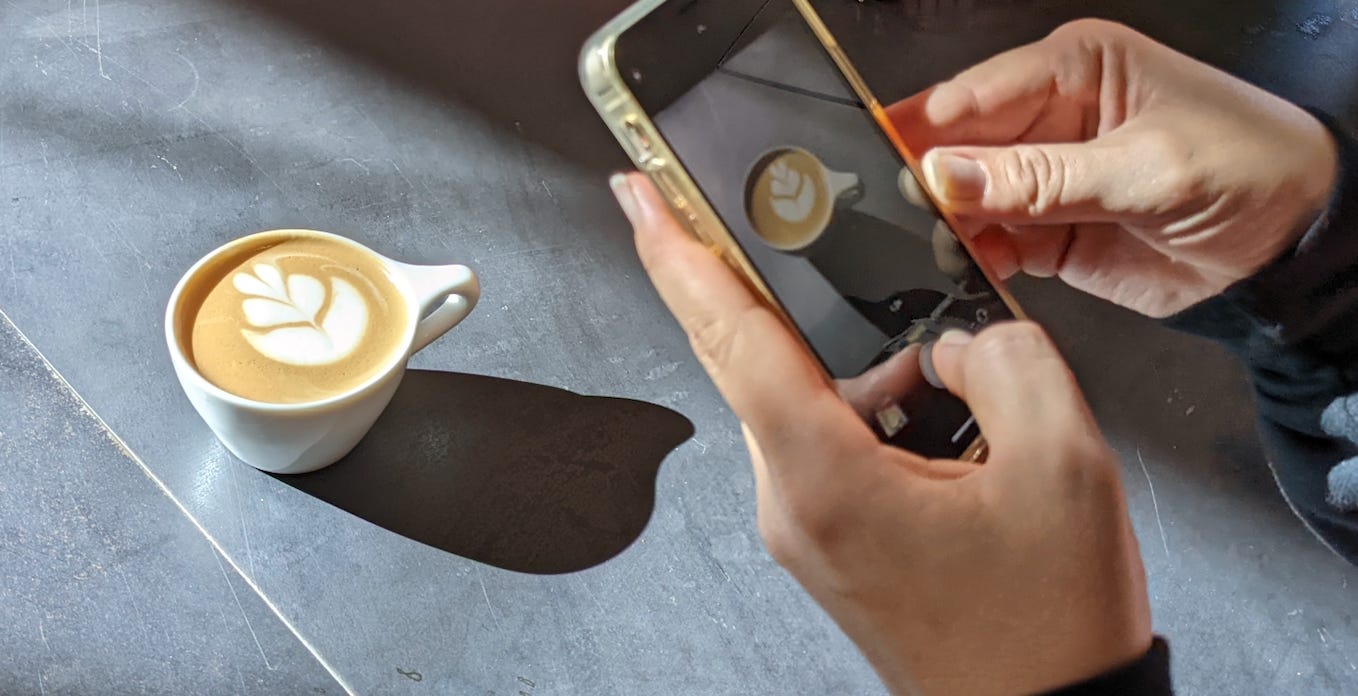
I was the oldest barista in the shop… a geriatric twenty-eight. I hadn’t worked in specialty coffee before but I’d worked at Starbucks, which had given me basic tasting skills and a working coffee vocabulary. My manager trained me to steam milk using water and watching for the whirlpool. We used chocolate syrup instead of espresso to pour latte art since it was cheaper than wasting beans. I mopped and took money and wiped down counters. My real coffee education began behind that pink machine. I started drinking cortados and espresso, preferring single origins to the lattes of my past. My coworkers taught me how to correctly whisk matcha, use measurements, and I burned too many coconut cream caramel sauces on the hot plate we kept in the back. I was becoming myself, whoever that was, and I could feel it.
When I returned to my job as a middle school teacher with a new haircut and cool clothes and the confidence of having a community, I could feel that I wouldn’t last long in my job. I was a fish pushing against the current and I resigned from my position a week into the school year. The school made inappropriate accusations against me and didn’t pay my last check until I contacted an attorney. When I went back and did the math, I’d made about $22,000 before taxes - much less than the salary on my contract. It was the worst time of my life and I was very raw. Eli had just started to go to school part-time so we were tight on money, and I was afraid that the school would try and substantiate the false accusations they’d made against me so I couldn’t teach again. Luckily, that never happened and I adjuncted at ASU in the winter semester.
The first people to learn about my messy job situation were my friends at the shop. In tears, I told the owner about what had happened and asked if he knew of any other shops that needed help. I needed more than just one coffee shop job to keep us afloat. He contacted a friend that he roasted with and I started working at Fillmore a few shifts a week. If it weren’t for the person in the news articles, I would never have met Tony, a GCU graduate and fellow writer, who Eli and I have shared many precious dinners with. The job wasn’t great and the shop wasn’t perfect, but it was a paycheck. Even then, despite Fillmore’s many limitations, it was exactly what I needed at the time.
The owner of the shop told me that a person he supplied beans for, Cat Zingg, was looking for baristas to help out on the weekends. I went to Hakiri Coffee, introduced myself, and started working on the bus within a few weeks. I quit Fillmore, got a full time job in a big building downtown, and worked with Cat on the weekends. Steph was making cold brew for the bus. So many friends from my first shop became people I worked elbow to elbow with on the bus. The feeling of that time is sweet, alive and deep.
I worked on the bus for the next two and a half years, seeing the owner of my first shop often when the bus’s machine would overheat or when I accidentally unplugged the water line. Frantically, Cat and I would text or call him at six am, and within an hour he’d be there with his bag of tools, bandanna, and cut off jeans. I felt so grateful to be close to someone who was so kind and reliable. The bus continued to grow into what eventually became Strawberry Coffee. We sourced our beans from my first shop. We supported other shops and they supported us. The coffee community in Phoenix became my home.
It wasn’t an easy decision to leave Phoenix in 2024, but I had been followed home by someone in the daylight who tried to get into my apartment. From that moment on, I was convinced that I wanted to live “in the country”. The high price of rent and the long, expensive flights back home were wearing on us. We’d lived downtown for three years. Catherine moved to New York and Sarah moved to New Jersey. I had taught a few classes with thems. I knew if I could build such a rich community in the fifth largest city in the US, I could do it anywhere. It was time to go.
The night of our goodbye party at Afternoon Studios, a ton of Eli’s speech pathology friends came to do karaoke. Tony had already moved to New York and Sarah was already in New Jersey. People from my first shop were invited and they all came, including the owner. There is no doubt in my mind that he didn’t smoke one of his hand rolled cigarettes in the parking lot, and I know he brought something to drink, probably an IPA like Two Hearted. The next day, we finished packing our U-haul and moved to Nebraska. The tension of feeling like we were doing the right thing and also missing the peopled life we had was, at times, unbearable. I went back to Phoenix as often as I could, getting shitty Airbnbs and espresso tonics at Futuro and haircuts with Rosa. Lane took me to a sushi place I’d never tried. It was a slow weaning off of the life that I knew into the unknown.
The first coffee shop I worked at was a gateway to all of the relationships I built in Phoenix. Not only did I just meet people, but the owner and manager taught me incredible skills. I started pouring latte art in that shop and slurping espresso from tiny white cups. I don’t have the same kinds of coffee shops in Nebraska. The coffee shops are not a grid of interconnected pals, but instead distinct islands. Eli and I started our own coffee event a few months into living here. It’s not the same as Phoenix, but it’s not meant to be Phoenix. Because of that first shop, I am able to do something completely my own, completely new.
I felt betrayed when I got that article in texts, in phone calls, and in messages. Things as simple as some of my favorite summer t-shirts came from that shop. Was I still allowed to wear them? Should I talk about it online, especially because I was such an advocate for the shop long after I’d stopped working there? I couldn’t reconcile the person I’d known with the mugshot that kept finding its way to me. I knew that I wanted to write about everything that happened, but I wasn’t sure how I would do it. The nuance of the situation still scares me - I love the owner of my first shop but I can’t allow that love to cloud the realities of what he did or was doing. What he was trying to do was wrong and he pled guilty to it. I want to approach the confusion and betrayal I feel, but I also want to preserve the memories that made me. To be honest, I still don’t know exactly what to say.
A naive part of me wants to believe that the experiences I had at the shop prepared me for now. I learned the hard way how to hold two things in one hand - to be horrified and sad while watching life unfold into something beautiful. Maybe I’m being too pedantic, focusing my attention on parts of my life that don’t need any more examination than they’ve already had. Maybe I’m onto something. I hope one day I’ll know.
No person is just one thing. The person in the mugshot and the person who put candy cigarettes in my Christmas stocking are the same person. I wonder if the lesson is not reconciling two realities, but accepting them. It’s okay to fondly remember the past, while still holding on to the grief of the present.


So sorry. Whatever the person pled guilty to was wrong and yes I do believe people can be good and terrible.
Sometimes they prey on the vulnerable and are good to the stronger people.
Even the worst people, and the most dangerous, make some friends. Maybe they have to be normal sometimes to help hide the bad. Maybe they are just both good and horrible.
I am glad you were only shown the good side. And I am sorry you were followed home. It’s unbelievable how women have to constantly be aware and protect themselves. It’s sad.
It’s getting worse not better but the trend will reverse. It always does so I remain hopeful and cautious and careful.